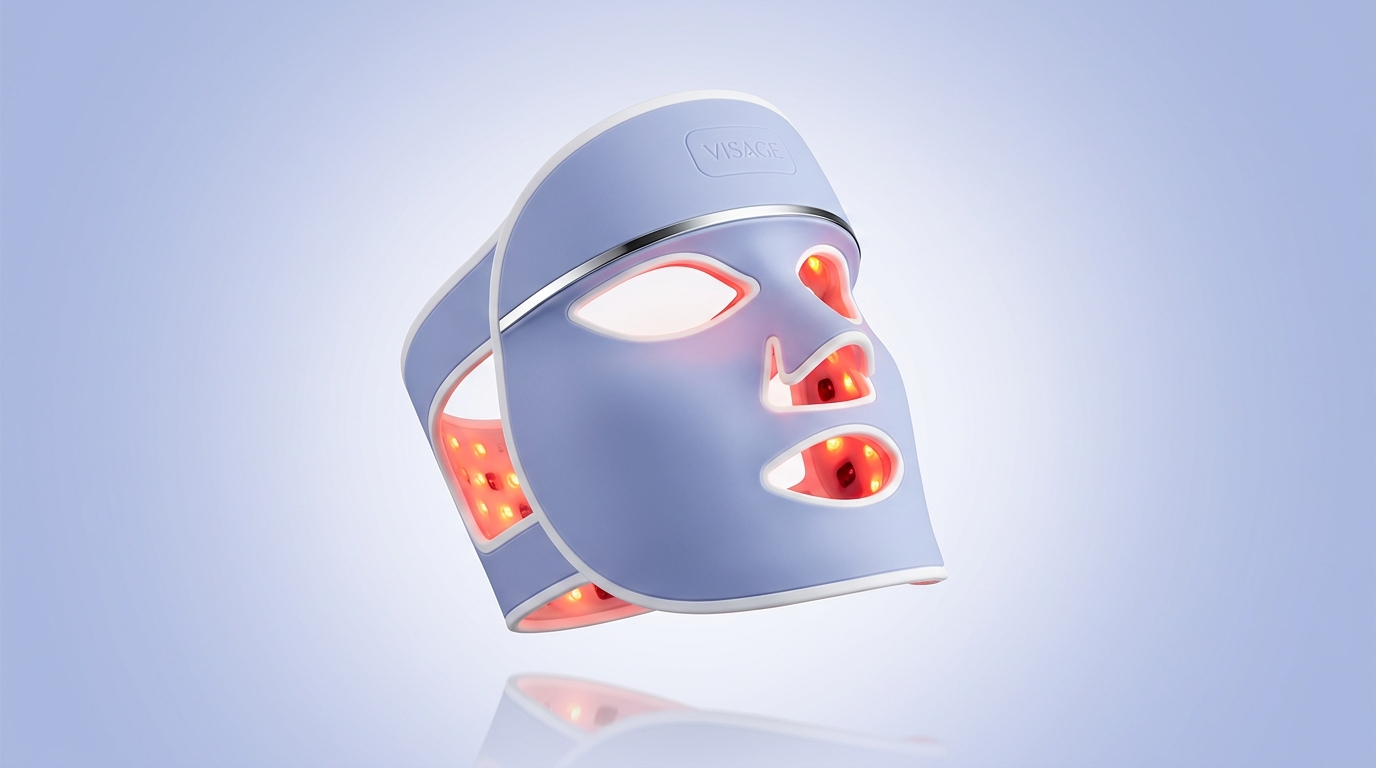
A skin-safe flexible-silicone face mask that delivers the two wavelengths the research keeps pointing back to — red and near-infrared. Held to the same bar we grade skincare by: real numbers, and the lab report to prove them.
The same dual-wavelength tech sells for $400–600 on brand markup — ours is $180, and we publish the lab report they won't.
Founding pre-order · reserve free today, pay when the run opens · built once 70 founders are in · ships ~5–6 weeks · fully refundable.
Cosmetic light therapy — not a medical device, and not intended to treat any disease.
The light-therapy aisle is full of devices that skip the wavelength that matters, mold to nobody's face, and hide their numbers. We built the opposite.
Red at 630nm works at the surface; near-infrared at 830nm reaches deeper. The combination is the one with the most published support — and the one cheaper masks quietly skip by shipping red-only or padding the LED count with cosmetic colors.
Soft food-grade silicone conforms to the contours of your face, so every LED sits close and the light lands evenly — cheeks, jaw, and the curve around the nose. Hard-plastic masks bridge over those gaps and dose unevenly.
We grade skincare on evidence, not marketing. This device is held to the same bar: real wavelengths, real irradiance, no fluff. If a number can't be stated honestly, it doesn't go on the box.
The shape of the mask decides how much of the light actually reaches your skin.
Red and near-infrared light therapy — known in the literature as photobiomodulation (and historically as low-level light therapy) — has a body of published research exploring effects on the appearance of skin tone, fine lines, and the look of the skin, with red and near-infrared the most-studied wavelengths.
We point you to the research rather than make promises. Studies vary in size, design, and quality, and results depend on consistency, wavelength, irradiance, and skin. What we can stand behind is the engineering: the right wavelengths, stated irradiance, and a fit that delivers the light evenly. (See: published research on photobiomodulation / low-level light therapy for skin.)
This is a cosmetic light-therapy device. It is not a medical device, is not evaluated by the FDA, and is not intended to diagnose, treat, cure, or prevent any disease or skin condition. It is not a treatment for acne, wounds, pain, or any medical issue. For anything that concerns you, see a dermatologist or other professional.
From under $100 to nearly $2,000, almost nobody publishes what actually reaches your skin — premium masks give you one headline figure, or none at all. We publish the entire report, and we do it before we charge you.
The full spectral power distribution — proof the diodes actually peak where we claim (630nm red + 830nm near-infrared), not 15nm off like ~40% of the units that get independently tested.
The two numbers nobody pairs: irradiance (mW/cm²) and dose (J/cm²) — measured at the skin and mapped across forehead, cheeks and jaw, with the LED-falloff heatmap most brands quietly hide.
A downloadable report from an accredited (ISO 17025) lab. Hand it to your dermatologist — or buy your own unit and re-test us. No other mask invites that.
Before a single founder's card is charged, we meter a production sample and publish the report right here — graded against the 35–50 mW/cm² clinical window. If it underperforms, we say so plainly and refund every founder. The receipts come first.
The specs below are the unit we're sourcing — the target. The lab report is what we'll actually prove.
Nothing rounded up, nothing left vague. This is the spec we're sourcing to — and every figure gets confirmed by the published lab report before we ship a single unit.
| Wavelengths | Red 630nm + near-infrared 830nm — the dual red/NIR combination, not red-only or padded with cosmetic colors. |
|---|---|
| LED count | 240 LEDs (120 dual-chip red+NIR diodes) for dense, even facial coverage. |
| Session length | ~10-minute sessions — one button, built-in timer, auto-shutoff. Designed for daily use. |
| Material | Skin-safe flexible food-grade silicone that conforms to face contours. |
| Power | Rechargeable, USB-C. No wall tether during a session. |
| Eye safety | Eye-safe design with shielded eye openings; no UV emitted. |
| Irradiance & dose | Measured at the skin and per facial zone — irradiance (mW/cm²) + dose (J/cm²), graded against the 35–50 mW/cm² clinical window and published in the lab report. Pending our independent test. |
Founding price $180 — the same dual-wavelength tech the $400–600 brands sell, minus the markup. No charge today: reserve your founder spot with your email, and we send your secure checkout link the moment the run opens. It's all-or-nothing: we build the first production run once 70 founders are in. Yours ships in ~5–6 weeks — and if we don't reach 70, nothing is charged and nothing is owed. Free shipping. HSA/FSA-eligible.
No charge today · founder price locked · secure checkout link by email when the run opens · 30-day money-back once it arrives.
$180 — the $400–600 tier's dual-wavelength tech for a fraction of the price. Founders ship in the first production run.
We build the first run only once 70 founders are in. Don't hit it? Nothing is charged and nothing is owed — and you can walk away anytime before it ships regardless.
Light therapy devices typically qualify with an FSA/HSA card or reimbursement.
The Visage LED Mask is a cosmetic light-therapy accessory in pre-launch validation. It is not a medical device, is not evaluated by the FDA, and is not intended to diagnose, treat, cure, or prevent any disease or skin condition. Statements about red and near-infrared light reference published research on photobiomodulation and are not a guarantee of results; individual results vary. HSA/FSA eligibility depends on your plan and may require a letter of medical necessity — confirm with your plan administrator.